
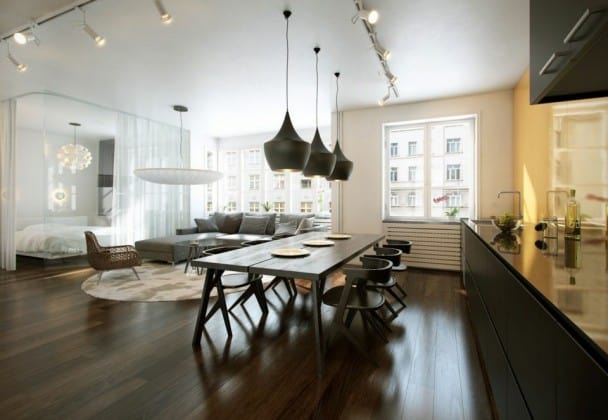
Adequate and appropriate lighting is essential for a comfortable and safe home. Well-lit rooms not only keep us functional, but also help to enhance family members’ moods and set the tone for various activities. Undoubtedly, bright lights energize people to be active, while subdued lighting is relaxing, and therefore, careful thought and attention should be given to using adequate lighting throughout the home to suit specific purposes.
What Are Some Benefits of Effective Lighting?
Well-lit areas help family members move safely around the home at night. Dusky stairwells or steps often become accident hazards without a guiding light for nighttime safety. Another benefit of good lighting is that a bright room prevents us from stumbling or falling when we can’t see clearly. Also, family members or guests can find dropped objects such as keys or a remote control for the television with adequate lighting. Furthermore, pet messes that might otherwise go unnoticed will be more readily visible. Illuminated outdoor areas discourage thieves from breaking into outbuildings or the home.
All in all, effective lighting can make a home safer for everyone. For instance, wall sconces or overhead lighting can help to prevent falling accidents, which are one of the leading causes of disability in the elderly. In addition, falls in homes injure or kill hundreds of people each year. Young children who fall in the dark often need medical care or emergency treatment.
Attractive lighting in each room further enhances a home’s beauty and makes it more enjoyable. Moreover, choosing the right lighting style can save on energy costs. In essence, good lighting leads to good living.
However, many homeowners are not as careful as they should be when selecting light fixtures. They assume that any type of fixture that is chosen for style or visual appeal is appropriate for the area they want to illuminate. That may not be the case, though. Here are the top 6 mistakes in purchasing lighting you will want to avoid.
1. Inadequate or improper lighting
Well-lit steps, hallways, and corners can reduce the risk of falling. Yet, some people buy light bulbs with wattage that is too low for the area needing to be lit. This can lead to a false sense of security and cause loved ones to trip or fall.
Sometimes the lighting fails to reach dark corners where people may not see wrinkles in the carpet, and trip over them. Another problem is that babies often find small objects on the floor, especially in areas that are not well-lit, and put them in their mouths, causing a possible choking hazard. Likewise, pets often consume inedible objects on the floor that are unseen by owners.
In addition to adequate lighting, it is a good idea to buy lighting that won’t quickly burn out or grow dim over time so as to save us from the agonizing bulb-changing process. LED bulbs certainly fit this criteria well as they are much more durable than incandescent bulbs and advances in manufacturing in recent years has greatly reduced the prices of LED bulbs to make it much cheaper than before and it just makes much more sense in the long run to get them. Bulbs that don’t break easily are also preferred in case they are accidentally dropped or get overheated, for instance, LED bulbs with plastic covers.
2. Wrong light bulbs for the fixture
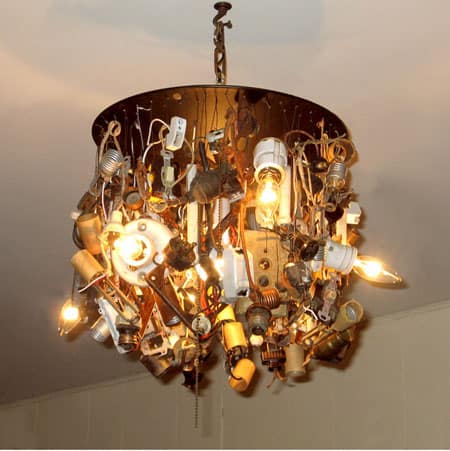
Light bulbs that are too high in wattage for a specific fixture may overheat and eventually cause an area fire. Also, sometimes they break and shatter into tiny pieces that can be difficult to clean up, leaving shards that cut people’s feet or get picked up by the sweeper, possibly damaging it. Another concern that should be noted is light bulbs which doesn’t physically fit into a fixture, but are forced into place by an over-eager homeowner. This may lead to an electrical shock or a possible fire. Some fixtures require a certain type of light bulb that the owner is not aware of
3. Wrongly-mounted light fixtures
With countless charming light fixtures available, many homeowners buy based on style without realizing the fixture may not be suitable for the intended area. For example, if a wall sconce lighting fixture is hung on an unstable part of the wall or is too heavy for the wallboard, it can damage the wall and maybe loosen or fall. Also, overhead lights such as chandeliers can be risky since they are often heavy, and could potentially hurt someone they lose a part or drop.
The same thing can happen with ceiling lights. If the fixture is not mounted correctly, the lights may cause electrical problems or be displaced.

4. Fragile fixtures
Trying to use indoor fragile light fixtures in outdoor areas that are exposed to harsh weather, in places such as a porch or patio, can cause the fixture to become damaged or broken. Some customers who purchase light fixtures don’t realize that there are certain types of lighting meant for indoors, outdoors, just as with indoor and outdoor carpeting. Indoor fixtures should be used in enclosed areas where they are not exposed to rain, sleet, snow, wind, or other bad weather.
5. Wrong electrical hookup
Prior to the installation of new light fixtures, it is important to have the electrical system checked to ensure it is safe for lighting use. Old outlets or those that have been unused for a long time may need to be checked by an electrician to ensure they are still functional. On the other hand, new outlets can be installed, if needed, to accommodate new light fixtures. Similarly, buying old-fashioned lights that were built decades ago may not fit current electrical outlets.
6. Overloading an electrical outlet
Depending on the type of light fixture used and the outlet it plugs into, usage may cause an electrical overload and blow a fuse, cause electrical shock to the person handling the light, or even start a fire. A surge protection strip should be used if the outlet contains more than one electrical device to prevent a blowout if lightning strikes or a fire in case of a surge.
The above six lighting problems can be readily avoided. In addition, homeowners who aren’t sure how to handle certain types of lighting can always consult an electrical contractor or arrange for an inspection. Indoor lighting will brighten the darkest day and even enhance people’s moods.
This is why good lighting is worth the time and effort needed to have the proper fit for each fixture, as well as ensuring that the electrical outlet or power source is safe. Screed provides basic precautions; any home can be both beautifully lit up and functionally safe!
FAQs
1. Why is it important to avoid mistakes when purchasing lighting?
Because the wrong choice can affect the mood, functionality, and energy efficiency of your space, correct lighting enhances design, saves money, and ensures comfort.
2. What are the most common mistakes people make when buying lighting?
The main mistakes include choosing the wrong size fixtures, ignoring room function, overlooking energy efficiency, mismatching styles, buying without considering brightness levels, and neglecting proper placement.
3. How do I choose the right size lighting for my room?
Measure your space and match fixture size to room dimensions. Oversized lights can overpower small rooms, while too-small lights may not provide enough illumination.
4. Why does room function matter when selecting lighting?
Each room has unique needs. For example, kitchens require task lighting, bedrooms need soft ambient lighting, and living rooms benefit from layered lighting.
5. Should I prioritize style or functionality in lighting?
Both matter. A stylish fixture that doesn’t provide adequate light will frustrate you, while a purely functional light without style may disrupt your décor. Aim for a balance.